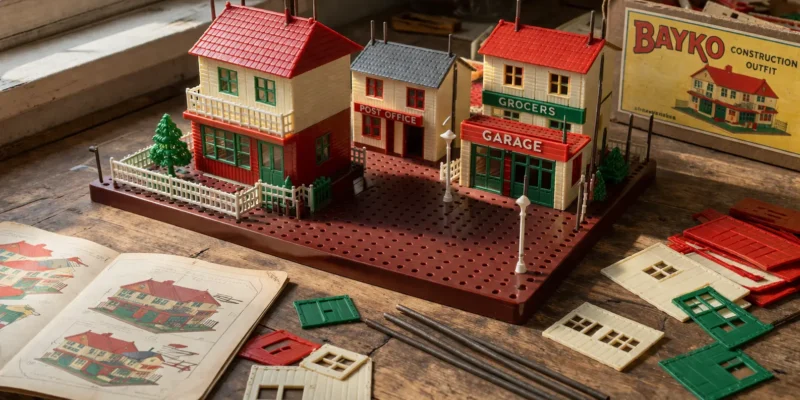
🧱 The Bayko Building Set — Creativity within constraint
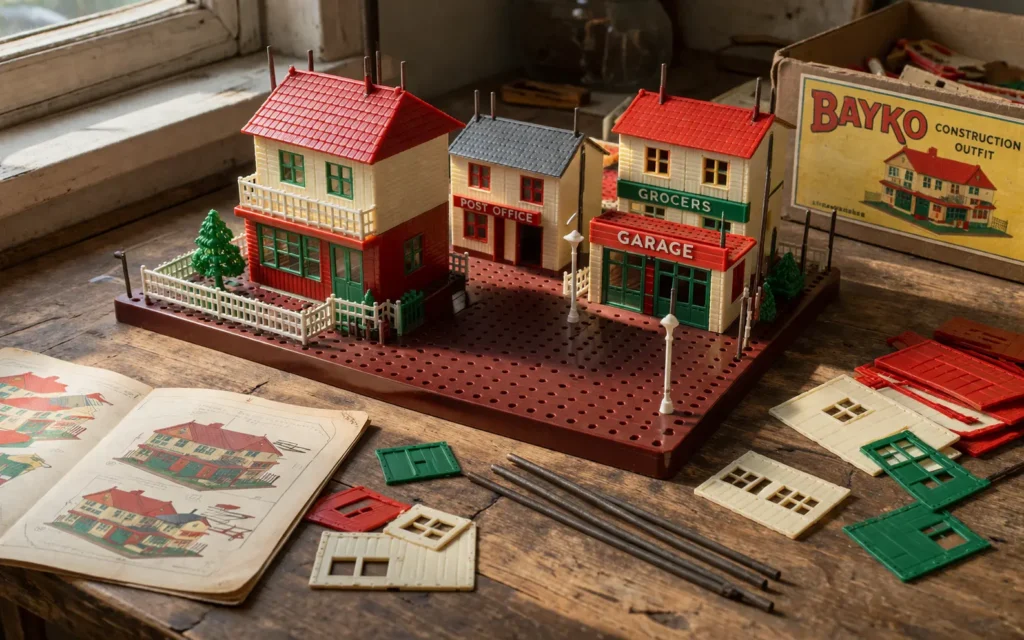
Build with what you are given.
🧠 UX Interpretation: Constraint shapes creativity
The Bayko building set came with a fixed system. A baseboard of holes, vertical metal rods, and a collection of walls, windows, and roofs made from Bakelite.
You could not cut, bend, or invent new pieces. Every structure had to emerge from the parts provided.
Yet within those limits, houses, shops, and entire streets appeared.
🎯 Theme: Systems guide imagination
The rods defined position. The panels defined form. The user worked inside a grammar rather than starting from nothing.
This was not free-form creativity. It was structured play. You learned what the system allowed, and then pushed gently against those boundaries.
The result was a quiet lesson in design. Constraint does not block creativity. It gives it shape.
💡 UX Takeaways
- Constraints can enable rather than limit creativity.
- Systems provide a language for building ideas.
- Fixed components can produce varied outcomes.
- Learning the rules is part of the experience.
- Design often emerges from what is not possible.
📎 Footnote
Bayko was developed in the 1930s by Charles Plimpton and became popular in post-war Britain. Its use of Bakelite, an early plastic, gave the pieces durability and a distinctive feel. The system remained largely unchanged for decades, reinforcing its rule-based approach to construction.