∞ Infinity — The idea that never ends
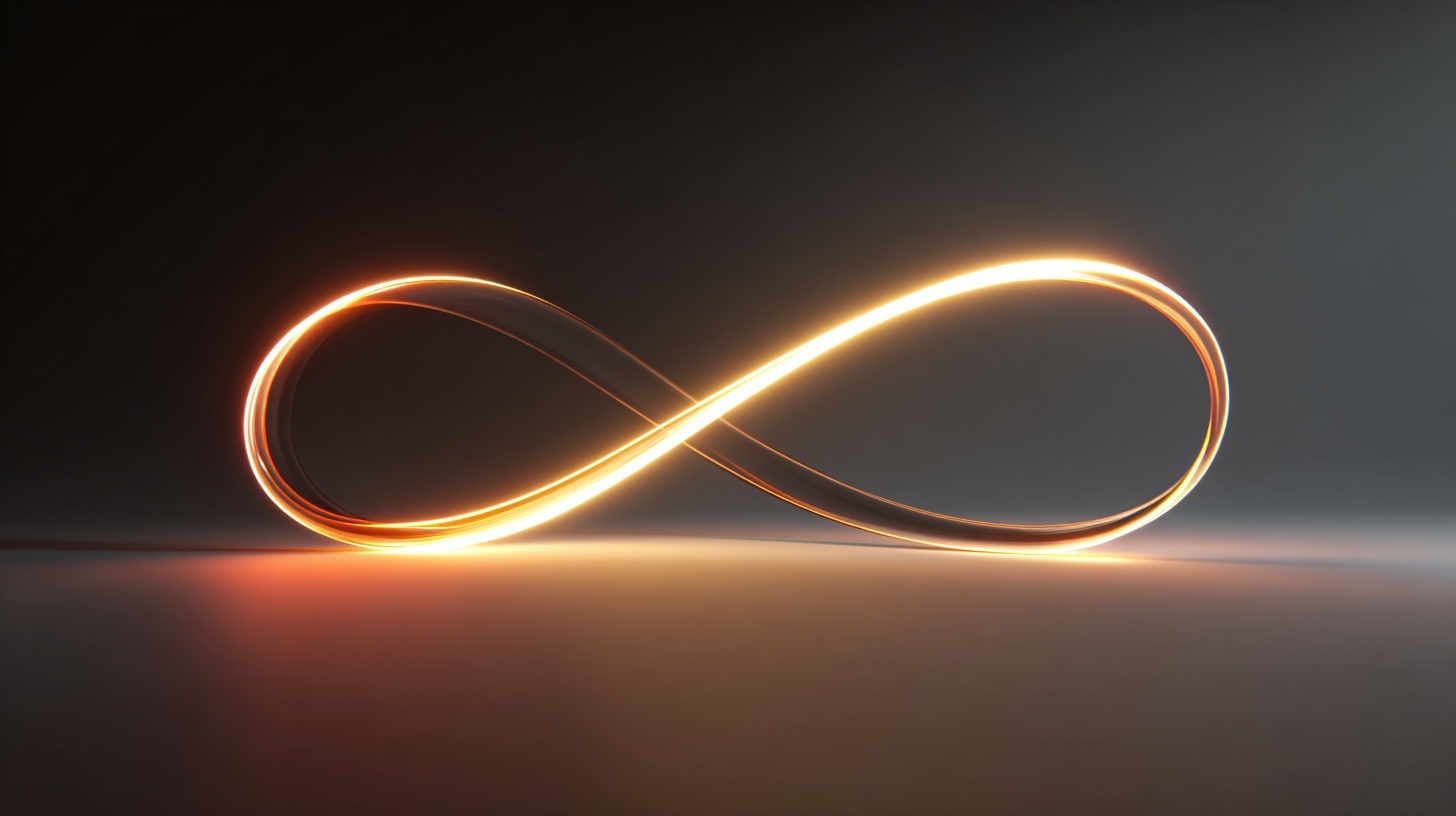
A line that loops forever, and never quite arrives.
🧠 UX Interpretation: Systems without an endpoint
Infinity is not a number in the usual sense. It is an idea. A way of describing something without limit.
The symbol suggests continuity. A loop with no beginning and no end.
In design, infinity appears wherever systems are meant to continue. Scroll feeds, autoplay, recommendation engines.
The user does not reach a final state. The experience keeps renewing itself.
🎯 Theme: Engagement without completion
Infinite systems remove stopping points. There is always another item, another action, another step.
This can feel effortless. Progress is replaced by flow.
But without an endpoint, completion disappears. The user is never finished.
The model is powerful because it aligns with attention. It keeps the system alive.
It works by avoiding the question of when to stop.
💡 UX Takeaways
- Endless systems can sustain engagement.
- Removing endpoints changes user behaviour.
- Flow can replace a sense of completion.
- Design shapes when users stop as much as when they continue.
- Absence of limits can feel both liberating and exhausting.
📎 Footnote
The infinity symbol was introduced by mathematician John Wallis in 1655. It has since become a universal way of representing unbounded processes, both in mathematics and in design.
📎 Footnote 2
Modern digital products often use “infinite scroll” and related patterns to extend engagement. These designs remove natural stopping cues, raising questions about attention, intention, and control.