🧬 DNA Double Helix — Life, written as code
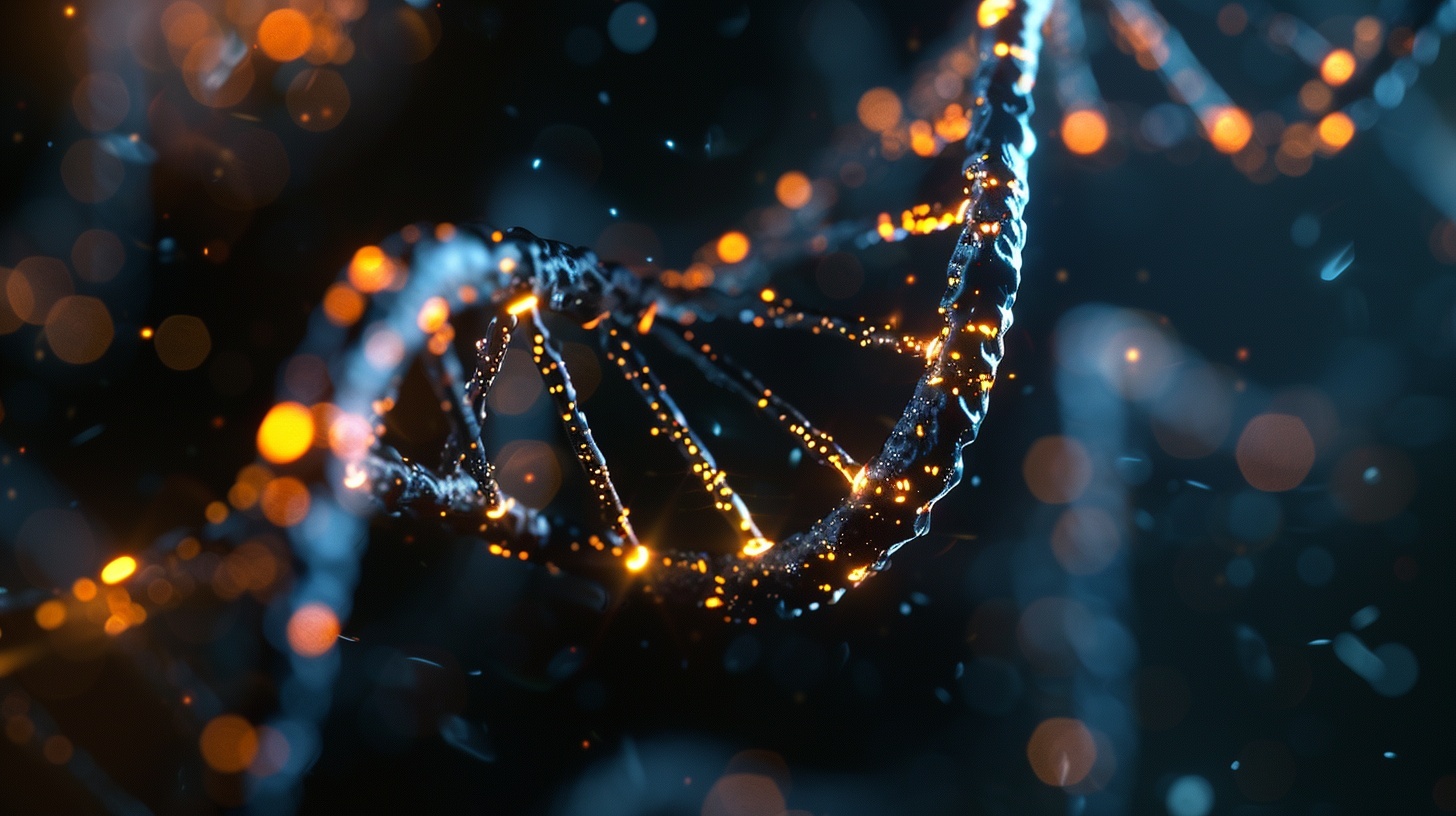
A structure that turns living complexity into something readable.
🧠 UX Interpretation: Information made physical
The discovery of the DNA double helix in 1953 revealed a structure that could store and transmit biological information. Two strands twist around each other, connected by pairs of bases.
This was more than a molecule. It was a system for encoding life.
The model made something abstract visible. Inheritance, variation, and replication could now be understood as processes.
The elegance of the structure made the idea compelling. It looked like it should work.
🎯 Theme: Complexity reduced to pattern
The double helix presents life as a sequence. Information flows through a set of rules.
This model invites comparison with language, with computing, with communication systems.
It simplifies without trivialising. The structure captures enough truth to guide entire fields of science.
Yet it is still a model. Gene expression, environmental influence, and biological systems extend far beyond the helix itself.
The clarity of the image can make the rest feel secondary.
💡 UX Takeaways
- Making information visible increases understanding.
- Elegant structures are easier to trust and remember.
- Simple models can unlock complex systems.
- Metaphors shape how systems are interpreted.
- Clarity can hide deeper layers of complexity.
📎 Footnote
The double helix structure of DNA was identified by James Watson and Francis Crick, building on the work of Rosalind Franklin and Maurice Wilkins. It became one of the most influential models in modern science.
📎 Footnote 2
Rosalind Franklin’s X-ray diffraction images, especially Photo 51, were critical to understanding the structure of DNA. Her contribution was not fully recognised at the time, reflecting the broader marginalisation of women in science during that period.